Bangalore's Peripheral Ring Road: How It Will Transform Airport Bus Routes
Discover how Bangalore's new Peripheral Ring Road (Bengaluru Business Corridor) will revolutionize BMTC Vayu Vajra airport bus routes, cutting travel times by up to 90 minutes and introducing new connectivity options for Kempegowda International Airport.
N
Nanda Gopal
Share on:
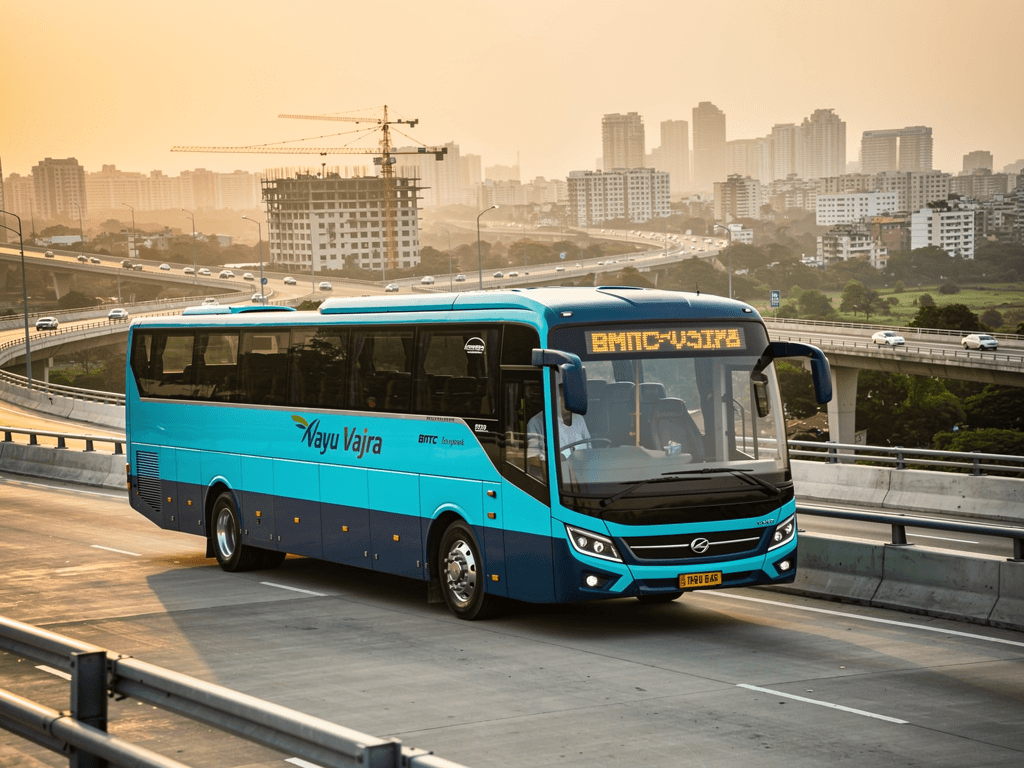
Bangalore is on the cusp of a major infrastructure transformation that will reshape how travelers reach Kempegowda International Airport. The **peripheral ring road** project, now officially known as the Bengaluru Business Corridor, represents one of the most ambitious road development initiatives in South India. For the millions of passengers who rely on BMTC Vayu Vajra buses to reach the airport, this 73.5 kilometer expressway promises faster journeys, reduced congestion, and potentially new route options that could revolutionize airport connectivity.
## Key Takeaways
- The Bengaluru Business Corridor will span approximately 73.5 kilometers, connecting Tumkur Road to Hosur Road via multiple arterial routes
- Airport bus travel times from Electronic City, Whitefield, and other peripheral areas could reduce by 30 to 45 minutes once the corridor becomes operational
- New interchange points may enable BMTC to introduce additional Vayu Vajra routes serving currently underserved neighborhoods
- The project timeline suggests completion around 2027 to 2028, with phased openings possible
- Current KIA routes like KIA-8 from Electronic City and KIA-6 from Kadugodi ITPL stand to benefit significantly from reduced traffic bottlenecks
## Understanding the Bengaluru Business Corridor Project
The Bengaluru Business Corridor, previously referred to as the Peripheral Ring Road or PRR, is designed as a 12 lane access controlled expressway that will create an outer loop around the city. Unlike the existing Outer Ring Road, which has become heavily congested due to the IT corridor development, this new infrastructure aims to divert through traffic away from the city center while providing faster connectivity to key destinations including the airport.
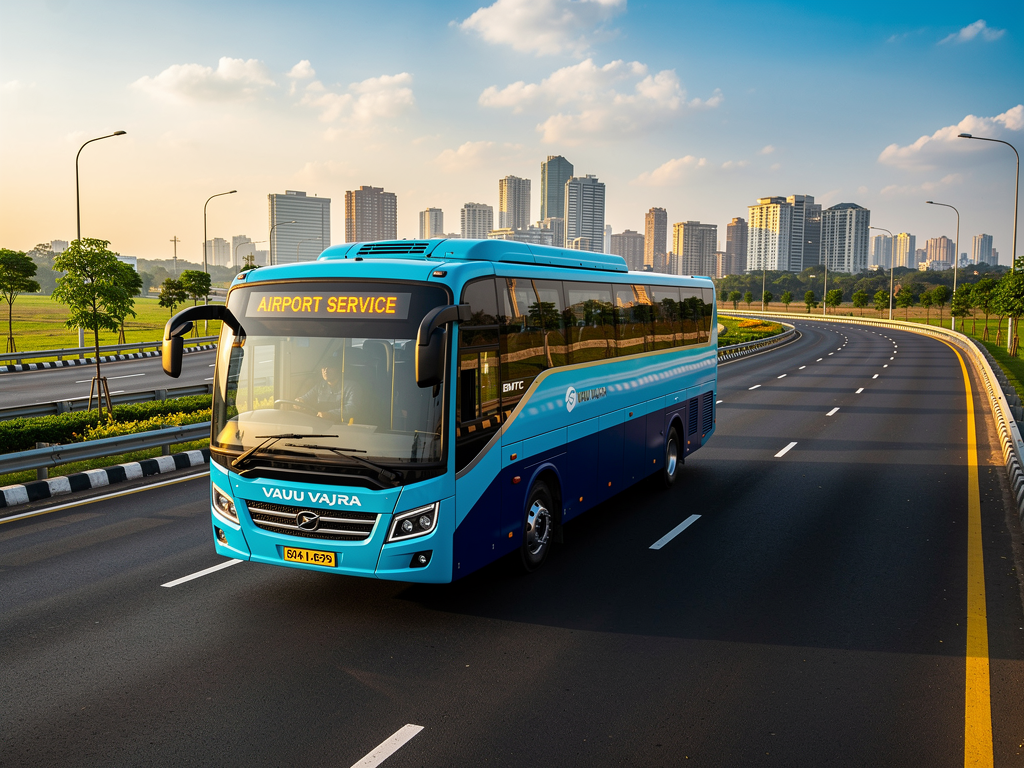
The corridor will stretch from the NICE Road junction at Tumkur Road, passing through Bellary Road, Hennur, Old Madras Road, and terminating at National Highway 44 on Hosur Road. This alignment is particularly significant for airport travelers because it creates direct high speed connections from areas that currently require lengthy detours through congested city roads. The project has received environmental clearances and land acquisition is progressing in multiple phases, according to recent government announcements.
> **Traveler Tip:** While the corridor is under construction, continue using the established Vayu Vajra routes. Check the [BMTC official schedules](https://mybmtc.karnataka.gov.in/) regularly for any temporary route modifications during construction phases.
## Current Airport Bus Route Challenges
Understanding why this infrastructure matters requires examining the existing pain points faced by Vayu Vajra passengers. The **KIA-8 route from Electronic City** currently navigates through Central Silk Board junction, one of the most notorious traffic bottlenecks in Asia. During peak hours, what should be a 90 minute journey can extend to nearly three hours, causing passengers to miss flights or arrive at the airport exhausted.
Similarly, the **KIA-6 route from Kadugodi ITPL** passes through Whitefield and Marathahalli, areas where traffic density has increased dramatically due to the concentration of technology parks. The journey time of approximately two hours often stretches significantly during morning and evening rush periods. Business travelers and software professionals who rely on these routes frequently report scheduling their airport departures with excessive buffers, sometimes arriving four to five hours before their flights.
The fundamental issue is that current routes must traverse the city's most congested corridors because no viable bypass exists. The Outer Ring Road, once envisioned as a solution, now functions as a primary urban artery rather than a peripheral bypass. This situation creates cascading problems including unpredictable journey times, passenger stress, and operational challenges for BMTC in maintaining schedule adherence.
## How the New Corridor Will Transform Airport Connectivity
Once operational, the Bengaluru Business Corridor will enable completely reimagined routing possibilities for airport buses. Consider the implications for passengers traveling from Electronic City, a major IT hub housing thousands of professionals who frequently travel for business. Instead of crawling through Silk Board junction, buses could access the corridor near Hosur Road and travel at expressway speeds directly toward the airport.
| Current Route | Typical Journey Time | Projected Time with Corridor | Potential Savings |
|---------------|---------------------|------------------------------|-------------------|
| Electronic City to KIA | 2.5 to 3.5 hours | 1.5 to 2 hours | 45 to 90 minutes |
| Whitefield to KIA | 2 to 3 hours | 1.25 to 1.75 hours | 45 to 75 minutes |
| Yelahanka to KIA | 45 to 90 minutes | 30 to 45 minutes | 15 to 45 minutes |
| Tumkur Road areas to KIA | 1.5 to 2.5 hours | 1 to 1.5 hours | 30 to 60 minutes |
The corridor's access controlled design means no traffic signals, no pedestrian crossings, and no mixed traffic conditions that currently plague urban routes. For international travelers arriving at Kempegowda Airport after long flights, the prospect of a predictable, comfortable journey to their destination represents a significant quality of life improvement.
## New Route Possibilities for BMTC Vayu Vajra Services
The infrastructure development opens possibilities for BMTC to introduce entirely new Vayu Vajra routes or significantly modify existing ones. Areas currently underserved by direct airport connectivity could gain dedicated services. Neighborhoods along the corridor alignment, including parts of Yelahanka, Hoskote, and areas near Electronics City, might see new boarding points that eliminate the need for passengers to travel to distant terminals.
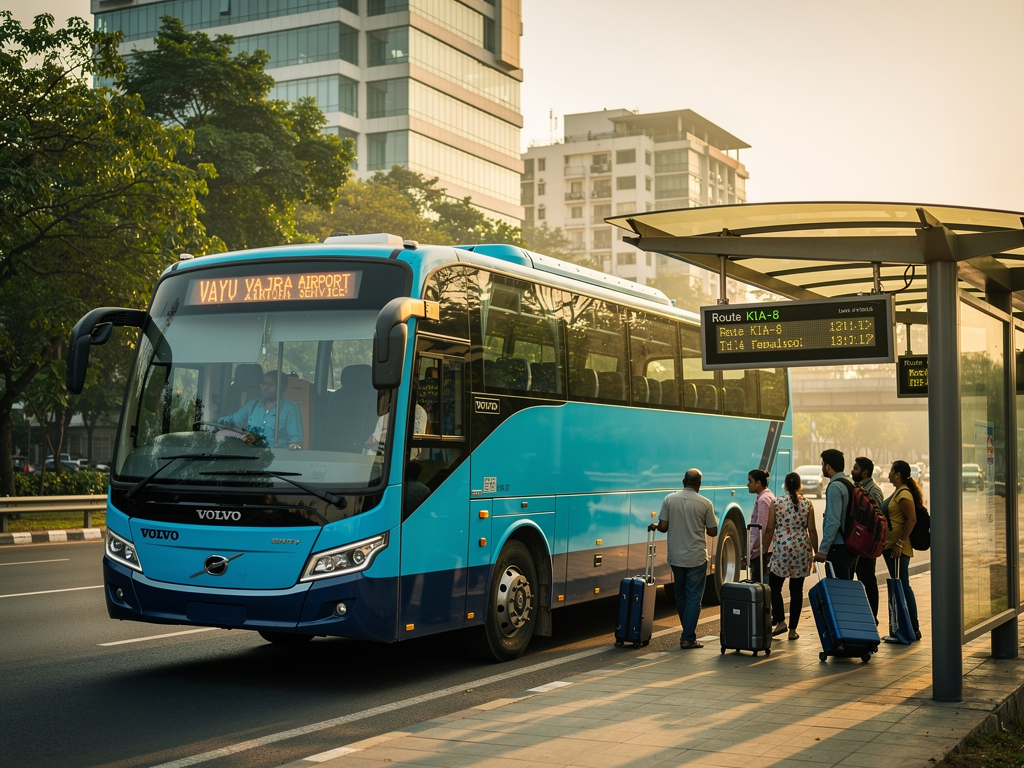
For budget conscious tourists and first time visitors to Bangalore, these potential new routes could provide options that are both economical and time efficient. Currently, travelers staying in peripheral areas often face the dilemma of expensive taxi rides or time consuming bus journeys with multiple transfers. Direct corridor access routes could eliminate this compromise.
- **Potential new route from Hoskote:** Serving the growing residential and industrial areas east of the city
- **Enhanced Yelahanka connectivity:** Faster access for residents of this rapidly developing northern suburb
- **Tumkur Road corridor service:** Direct connection from the northwestern industrial belt
- **Sarjapur Road integration:** Possible new route serving the booming tech corridor
The [Bangalore airport bus route network](https://bangaloreairportbus.com) currently includes routes KIA-4 through KIA-17, and infrastructure improvements historically correlate with service expansions. When the metro reached certain areas, BMTC introduced feeder services, and similar patterns could emerge with the corridor completion.
## Timeline and What Travelers Should Expect
The Bengaluru Business Corridor project has faced various delays common to large infrastructure projects, but recent progress suggests accelerated momentum. Land acquisition, often the most contentious phase, has advanced significantly in multiple stretches. Construction contracts have been awarded for several packages, and physical work is visible along portions of the alignment.
Realistic expectations place substantial completion around 2027 to 2028, though phased openings could bring benefits earlier. Travelers planning trips in the near term should continue relying on existing routes while monitoring announcements for any early operational segments.
> **Planning Ahead:** For current travel needs, the [Electronic City to airport bus schedule](https://bangaloreairportbus.com) offers frequent departures throughout the day. Build in extra time during peak hours until the corridor becomes operational.
During the construction period, some existing routes may experience temporary modifications as work progresses near current bus paths. BMTC typically announces such changes through their official channels, and staying informed helps avoid last minute surprises.
## Impact on Fares and Service Frequency
Infrastructure improvements generally enable operational efficiencies that can influence both fares and frequency. Faster journey times mean buses can complete more round trips daily with the same fleet, potentially increasing service frequency without proportional cost increases. For daily commuters between Bangalore city and airport areas, this could mean shorter waits and more departure options.
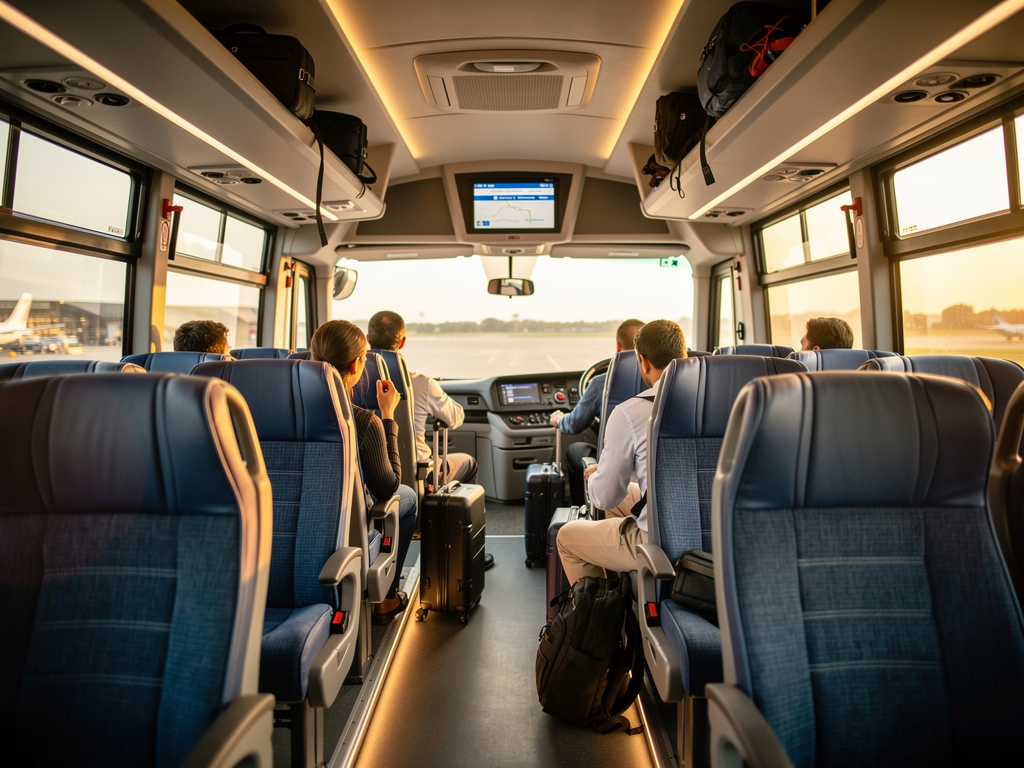
Fare structures might also evolve. Currently, Vayu Vajra fares range from approximately ₹210 to ₹330 depending on route and distance. While expressway tolls could theoretically add costs, the operational savings from reduced fuel consumption and better asset utilization might offset these factors. BMTC's historical approach has maintained affordable pricing even as service quality improved.
## Conclusion
The Bengaluru Business Corridor represents a transformative opportunity for airport travelers across Bangalore. By creating a true bypass that connects peripheral areas directly to airport access roads, this infrastructure will address the fundamental challenge that has plagued airport bus services for years. Whether you are a software professional catching an early morning flight, a tourist exploring South India on a budget, or a local resident picking up visiting family, the improvements promise meaningful benefits.
While completion remains a few years away, understanding the project helps travelers plan for the future and appreciate the context of current service limitations. The combination of reduced journey times, potential new routes, and improved reliability will strengthen the case for choosing Vayu Vajra buses over more expensive alternatives.
## Frequently Asked Questions
### When will the Bengaluru Business Corridor be completed and operational?
Current projections suggest substantial completion between 2027 and 2028, though this timeline has shifted previously due to land acquisition challenges and administrative processes. The project is being executed in multiple packages, which means certain stretches might open earlier than others. Travelers should monitor official Karnataka government announcements for updates on specific segment completions. The phased approach could bring partial benefits even before full completion, particularly for routes that can utilize early operational sections. Construction progress has accelerated recently following resolution of several land disputes that had stalled work in previous years.
### Will existing Vayu Vajra routes change once the corridor opens?
BMTC will likely evaluate route modifications based on the new infrastructure possibilities, though specific decisions will depend on passenger demand patterns and operational feasibility studies. Routes like KIA-8 from Electronic City and KIA-6 from Whitefield are strong candidates for alignment changes that could significantly reduce journey times. However, BMTC typically maintains some service continuity to avoid disrupting established passenger patterns. The most probable scenario involves introducing new express variants that use the corridor while maintaining existing routes for passengers who board at intermediate stops. Official announcements regarding route changes typically come several months before implementation.
### How much time could I save on my airport journey once the corridor is operational?
Time savings will vary significantly depending on your origin point and current traffic conditions on your route. Passengers from Electronic City could potentially save 45 to 90 minutes during peak hours, while those from Whitefield might see reductions of 45 to 75 minutes. Areas closer to the airport like Yelahanka might experience more modest improvements of 15 to 45 minutes. These projections assume full corridor utilization and optimal traffic flow on the expressway. The access controlled nature of the corridor, with no traffic signals or intersections, provides the most significant advantage during periods when current routes experience severe congestion.
### Will airport bus fares increase because of expressway tolls?
While the corridor will likely include toll mechanisms for private vehicles, public transport often receives exemptions or subsidized toll arrangements in Indian infrastructure projects. BMTC's operational savings from faster journey times and improved fuel efficiency could offset any toll costs that might apply. Historical patterns suggest that BMTC maintains relatively stable fare structures even when infrastructure changes occur. The current fare range of ₹210 to ₹330 for Vayu Vajra services has remained consistent despite fuel price fluctuations and other cost pressures. Any fare adjustments would likely be announced well in advance through official BMTC channels.
### Are there any interim improvements planned before the corridor completion?
Several interim measures are being implemented to improve airport connectivity while the corridor is under construction. These include signal optimization at key junctions, dedicated bus lanes on certain stretches, and improved coordination between traffic management systems. BMTC has also been gradually expanding its fleet of Vayu Vajra buses to increase frequency on popular routes. Additionally, the Namma Metro expansion, particularly the airport line, will provide an alternative that complements bus services. Travelers should explore combining metro and bus options for certain journeys, as multimodal approaches can sometimes offer time savings even with current infrastructure limitations.
### How will the corridor affect travelers coming from areas not directly along its route?
Even travelers whose origin points are not directly adjacent to the corridor may benefit from reduced overall traffic congestion. When through traffic and freight vehicles shift to the corridor, existing urban roads should experience some relief. Additionally, BMTC might introduce feeder services that connect to corridor access points, creating hub and spoke patterns that extend benefits to wider areas. The corridor's interchanges with existing major roads like Bellary Road, Old Madras Road, and Hosur Road will create multiple access opportunities. Passengers from areas like Koramangala, Jayanagar, or central Bangalore might find that connecting to a corridor access point becomes faster than current direct routes during peak hours.
### Explore Complete Vayu Vajra Schedules and Routes
Ready to plan your next airport journey? Visit [Bangalore Airport Bus Timings](https://bangaloreairportbus.com) for comprehensive schedules, fare information, and real time updates on all BMTC Vayu Vajra routes. Whether you are traveling today or planning ahead for when the new corridor transforms your commute, having accurate timing information ensures you reach your flight stress free.